
Home / IRIS Power Saver / Factories
Energy saving for factories · UAE
Cut the electricity your factory's motors use
In most factories, motors, compressors and pumps account for the largest share of the electricity bill. The IRIS power saver reduces the energy those loads draw, and the saving is proven on your own meter before you roll it out.
The problem
Where a factory's energy goes
Air compressors that load and unload all day. Hydraulic presses and injection moulding machines. Conveyors, mixers, crushers, extraction fans, cooling-water pumps and fixed-speed chillers. Every one is an inductive load, and every start, stop and cycle carries electrical losses that show up as kWh on the bill.
With UAE summer temperatures, cooling adds a second layer of motor load for half the year. For a plant running two or three shifts, even a single-digit percentage saving on these loads is a meaningful sum.
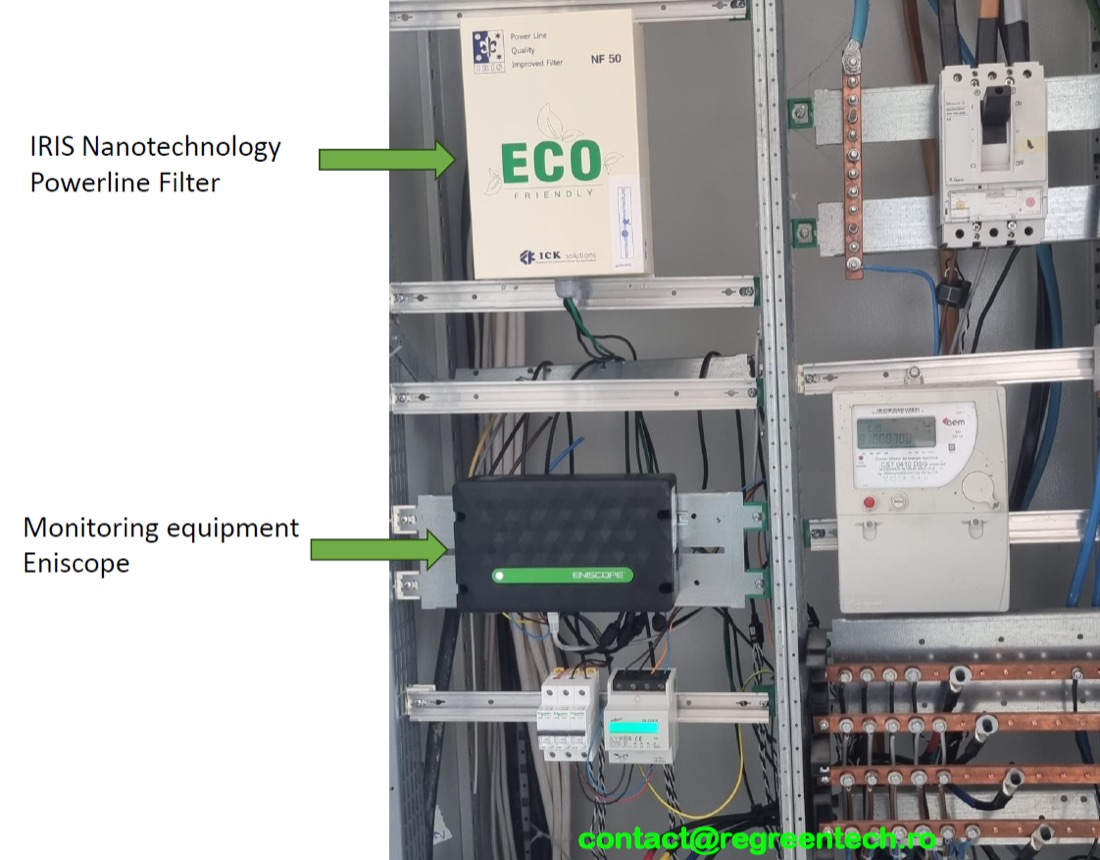
IRIS is a passive filter connected in parallel to the low-voltage distribution board. According to the manufacturer, it reduces those losses so the same work draws less energy. It does not lower your voltage or change how the machines run.
Factory loads that suit IRIS
- Air compressors with load/unload or start/stop cycling
- Presses, cutting, moulding and extrusion machines
- Conveyors, cranes, hoists, mixers and crushers
- Process, cooling-water and transfer pumps
- Fixed-speed chillers, cooling towers and extraction fans
Not suitable
- Motors driven by VFDs, inverters or soft starters
- Mostly resistive boards: furnaces, ovens, kilns, heaters
- Medium-voltage motors (3.3 kV and above)
On mixed boards we fit IRIS only to the direct-on-line feeders. If your plant is a poor fit, we will say so.
Field results
Measured savings in manufacturing plants
Results from metered before-and-after studies reported by the manufacturer and its partners.
Past results do not guarantee the saving at your site. Full case study reports are available on request.
What to expect, by load mix
Manufacturer's guide table. Used to set expectations, then confirmed with a pilot.
| Motor share of the board's load | Typical plant | Expected saving |
|---|---|---|
| About 90% | Heavy industry: presses, crushers, mills, large compressors | 13.5 – 16.3% |
| About 70% | Light industry: assembly, packaging, plastics, food | 10 – 12.9% |
| About 50% | Mixed boards with significant lighting, heating or office load | 7 – 9.5% |
How it works for a factory
Start with one board. Let the meter decide.
Survey
We review your bills, single-line diagram and load list, and identify the boards with direct-on-line motor loads.
Baseline
A power logger records the chosen board, typically for two weeks, alongside production output.
Install
A licensed electrician connects IRIS on the load side of the breaker in about 30 minutes.
Compare
We log again under comparable production and report kWh, cost and CO₂ saved.
Also for factories
Keep the panels clean without stopping the line
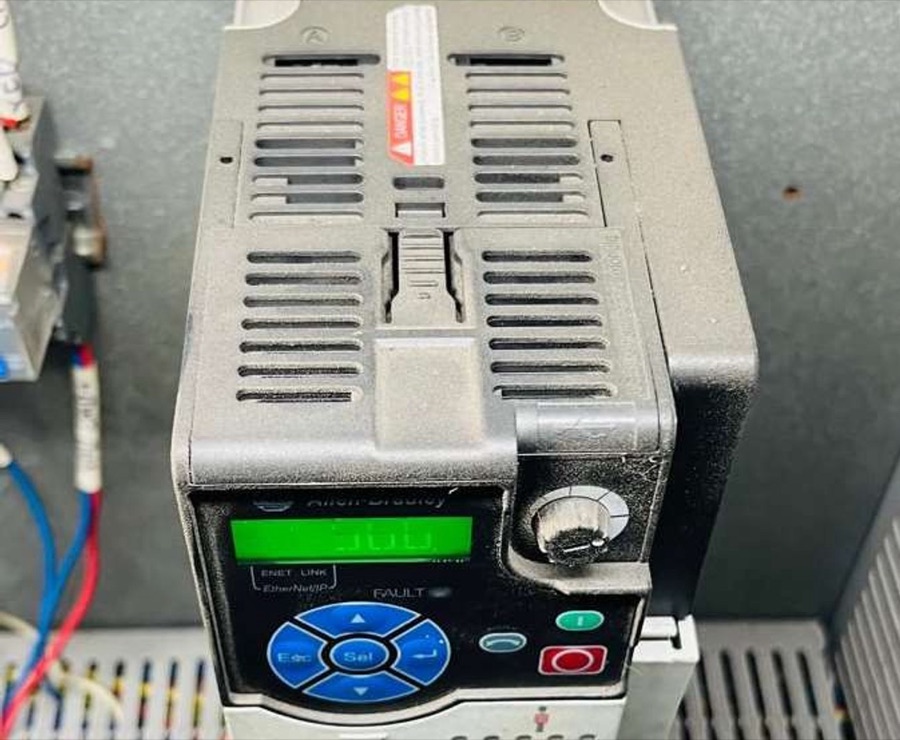
Factory panels collect process dust, fibres and oil mist. InstaClean is a 100% non-conductive liquid that cleans drives, MCCs and control panels while they stay energised, so maintenance does not have to wait for the annual shutdown.
- Lower component temperatures and fewer nuisance trips
- Before-and-after photographs and thermal readings
- Suitable for the VFD panels that IRIS does not cover
Common questions
From plant and maintenance managers
Most of our new machines have VFDs. Is there still a case for IRIS?
Only on the boards that feed direct-on-line loads. In many plants that still includes air compressors, older presses, pumps, extraction fans and chillers. The survey separates the two, and we quote only where the fit is good.
We already have capacitor banks for power factor. Does IRIS replace them?
No. A capacitor bank corrects power factor; IRIS targets load loss, and the two can work side by side. Where power factor is already well corrected the saving may be lower, which is why we pilot first.
Will installation interrupt production?
Each unit needs a short planned isolation of the board it is connected to, typically about 30 minutes. We schedule it for a shift change, a break or a maintenance window.
How do we know the saving is real and not just lower production?
The comparison is made per unit of output or per run-hour where possible, over comparable periods before and after. You see the logged data, not only our summary.
Does the saving reduce our demand or fixed charges?
The saving applies to the energy (kWh) part of the bill for boards fitted with IRIS. Fixed and demand charges are not affected.
Pick your most motor-heavy board
We will survey it, size the unit and run a metered before-and-after test at your factory, anywhere in the UAE.